




Overview
Plastic pollution is one of the most urgent environmental challenges of our time. From contaminating our water, air and soil to endangering human health and disrupting ecosystems worldwide, its far-reaching consequences demand immediate action.
Marine plastic pollution transcends borders, requiring robust policies and cooperation, adequate knowledge and capacity building, effective consumer awareness and behavior change, and genuine private sector commitment to address effectively.
But to truly understand this crisis, let’s start with the basics: What exactly is plastic, and how did it become such a pressing global issue?
What is plastic?
Plastic is a type of material that is soft, flexible, and easy to mold into any shape. This, coupled with its lightweight, cheap, and durable nature makes it a very popular material to use for making all sorts of products, from plastic bags to aircraft parts.
What are the different types of plastics?
There are actually many different types of plastics. One way to differentiate them is by their chemical structure. Based on this, the most common types of plastics and some of their uses are (Plastic Oceans, 2021; UNEP, 2021 p.11):
Polyethylene Terephthalate (PET or PETE) for food and drinks packaging and clothing.
High-Density Polyethylene (HDPE) for milk cartons, detergent bottles, and buckets.
Polyvinyl Chloride (PVC or Vinyl) for pipes, credit cards, and toys.
Low-Density Polyethylene (LDPE) for plastic wrap, bubble wrap, and grocery bags.
Polypropylene (PP) for straws, bottle caps, and disposable diapers.
Polystyrene (PS or Styrofoam) for cups, food containers, and cutlery.
In 1988, the Society of Plastics Industry introduced a system to categorize plastics into seven groups to facilitate recycling based on the six plastic types mentioned above and a seventh group for “Others” (Plastic Soup Foundation, n.d.). Since then, most plastic products are given a triangle sign with the number of the category that they fall under in the middle of the triangle.
Plastics are also often grouped by size. Although there is no strong consensus on the definitions yet, generally, the categories are megaplastics (> 1 m), macroplastics (25 mm – 1 m), mesoplastics (5 – 25 mm), microplastics (<5 mm), and nanoplastics (< 1 μm) (UNEP, 2021 p.12).
How much of our waste is plastic?
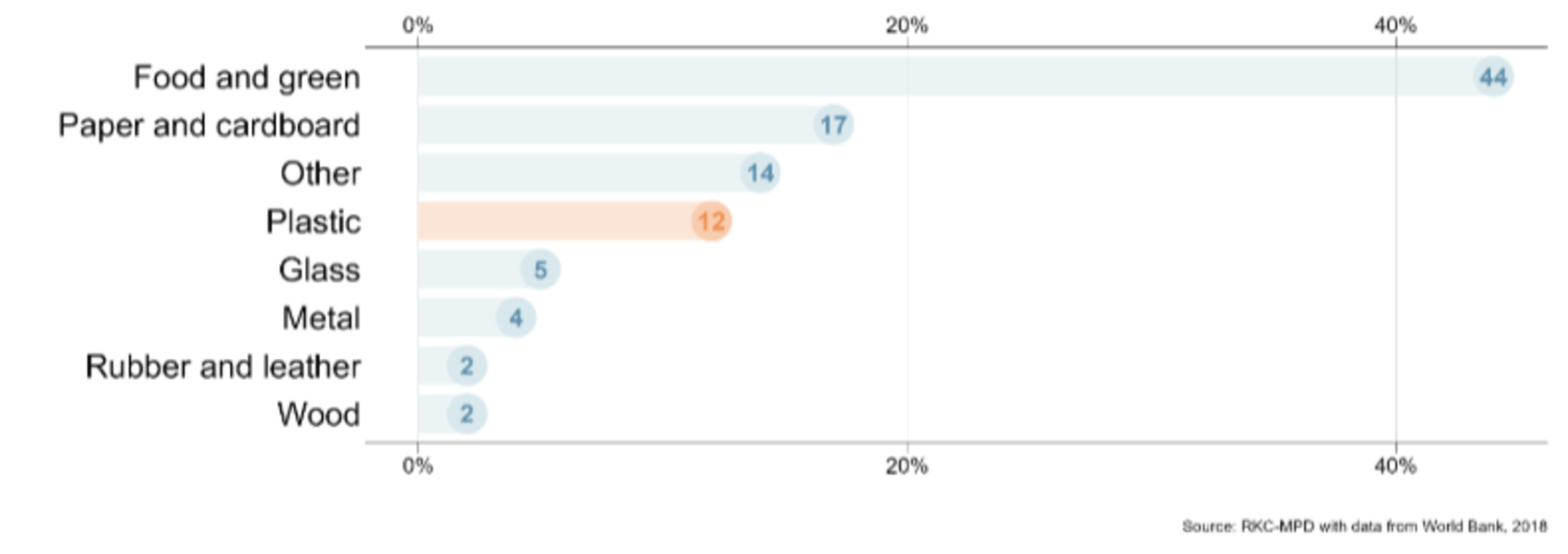
Plastics ranks as the 4th item of our global waste production, representing 12% by weight. This is only outranked by food and green waste (44%), paper waste (17%), and other or uncategorized waste (14%) (World Bank, 2018 p.29).
Why is single-use-plastic (or SUP) so problematic?
Single-use-plastics (SUPs) are plastics that are produced to be used once (or for a very short time), and then thrown away or recycled (UNEP, 2018 p.2). Some familiar examples are shopping bags, food packaging, cups and bottles, straws, containers, and cutlery (UNEP, 2018 p.2). In 2021 alone, global SUP production reached 139 million metric tons or over one-third of total plastic production (Charles & Kimman, 2023 p.23; UNEP, 2021 p.99). Imagine how much plastic waste is generated from that! If we can reduce the unnecessary use and production of SUPs, we can automatically reduce a very big part of plastic waste problem at the source.
Why are marine plastics particularly problematic?
Marine plastics are plastics that exist in the marine environment, originating from both marine and land sources, often transported through river pathways. This presents a significant challenge, as once plastic waste reaches the water body, it becomes difficult to retrieve. Although efforts are made to collect plastic waste floating on the ocean’s surface, it is in general too costly to be done systematically and on a large scale. Therefore, before the oceans become a dumpsite for our plastic waste, it is imperative to prevent marine plastic pollution from happening altogether, creating the urgency to reduce plastic waste generation. This is especially true considering the negative impacts of marine plastics, which include:
Harm to wildlife
Animals may become entangled in or ingest marine plastics, get hurt, fall sick, or die in the process (Secretariat of the Convention on Biological Diversity, 2016 p.17).
Human health impacts
Marine plastics may enter our bodies through the food chain (Secretariat of the Convention on Biological Diversity, 2016 p.16; WHO, 2022 p.28). Furthermore, chemicals in plastics may also be dangerous for both marine animals and humans (Secretariat of the Convention on Biological Diversity, 2016 p.16; WHO, 2022 p.99).
Disruption on ocean activities
Furthermore, plastic waste may also disturb our ocean activities such as marine tourism, fishing, and navigation (Secretariat of the Convention on Biological Diversity, 2016 p.30).
What do we know about plastic's impact on human health?
The impact of plastic on human health is still rather unclear, but many reports have emerged from studies of plastic exposure to humans through food and beverage, drinking-water, and air (WHO, 2022 p.43). However, it is important to note that plastics may impact human health not only when used but also throughout the entire plastic life cycle, from when they are produced to disposed of (Landrigan et al., 2023). Recent studies show that these health impacts range from traumatic injury to heart and lung diseases, cancers, and poisoning (Landrigan et al., 2023; WHO, 2022 p.88).
Will plastic disintegrate and return to nature with time?
Technically plastics can break down and return to the environment, but the process is rather complicated and it is difficult to determine just how long it would take as it depends on many factors, including the chemical composition of plastics and its surrounding environment (e.g. temperature as well as exposure to light and water) (Key, 2022, p.219; Ward & Reddy, 2020). Without the optimal conditions, plastics may not degrade and just pile up in landfills or the environments that they leak to.
Burning might be an alternative way to get rid of plastic waste, but if not done properly, it can also cause more harm, both to humans and the environment (Pathak et al., 2023). Thus, creating a circular economy for plastics, by taking the end-of-use plastic, treating it, and producing new plastic products out of it, is a better solution to managing plastic waste. However, recycling plastic products is not without its environmental footprint (e.g., energy consumption, carbon emissions) (Saleem et al., 2023). This is why minimizing the waste generation itself is always the best solution.
How are we currently dealing with plastic waste?
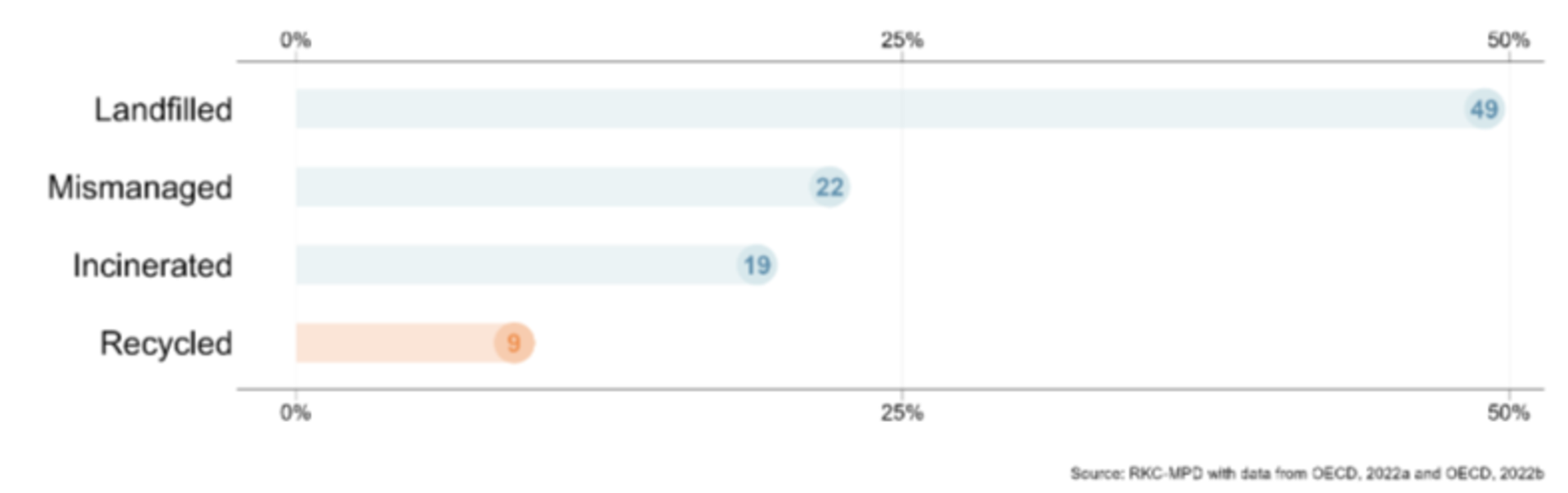
49% of our plastic waste are sent to licensed landfill until the landfill is full.
22% are mismanaged, by being openly burnt, thrown into unlicensed landfill or dump site, scattered or directly leaking into the environment.
19% are sent to incineration facilities, sometimes also to waste-to-energy facilities to be burnt.
Only 9% are recycled, predominantly easier-to-collect plastic types such as PET bottles.
What is recycling?
Recycling is the process of utilizing used plastics to create new plastic products (UNDP, 2023). It generally involves the following steps (UNDP, 2023):
Plastic waste is collected.
Plastic waste is sorted to separate it from other types of waste and to classify it based on the type of plastic.
Plastic waste is cleaned by washing and drying to remove any dirt or unwanted substances.
Plastic waste is processed by being ground into smaller pieces, melted, and pressed into plastic pellets.
The recycled plastic pellets are used to produce new plastic products.
Recently, new terms have emerged to describe more specific types of recycling. Downcycling refers to recycling that results in plastic products of a lower quality, such as recycling PET bottles into clothing fibre (UNDP, 2023). Upcycling, on the other hand, is the process of taking an old and unused material and adding value to it by giving it a new use or function (Ramos, 2021; Wegener, 2016) such as using plastic sachets to make bags.
Why is plastic difficult to recycle?
Unlike paper, metal, or glass, plastics are rather difficult and expensive to recycle. Technically, 15% of the plastic waste that we produce is collected for recycling but not all ends up being recycled – in fact, 40% of this amount is eventually disposed of (OECD, 2022). This means that only 9% of our plastic waste is really recycled (OECD, 2022). Some of the challenges to plastic recycling are:
Not enough plastic waste is collected to be recycled.
Difficulty in transporting plastic waste to recycling centres.
Different types of plastics are mixed.
Plastic waste is mixed with other types of waste.
Plastic waste is dirty or contaminated.
Recycling is often more expensive than producing new plastics from fossil fuels.
Plastics degrade in quality as they are recycled multiple times.
Limited capacity, infrastructure, and technology to collect and recycle plastic waste.
What are some strategies to solve the plastic waste problem?
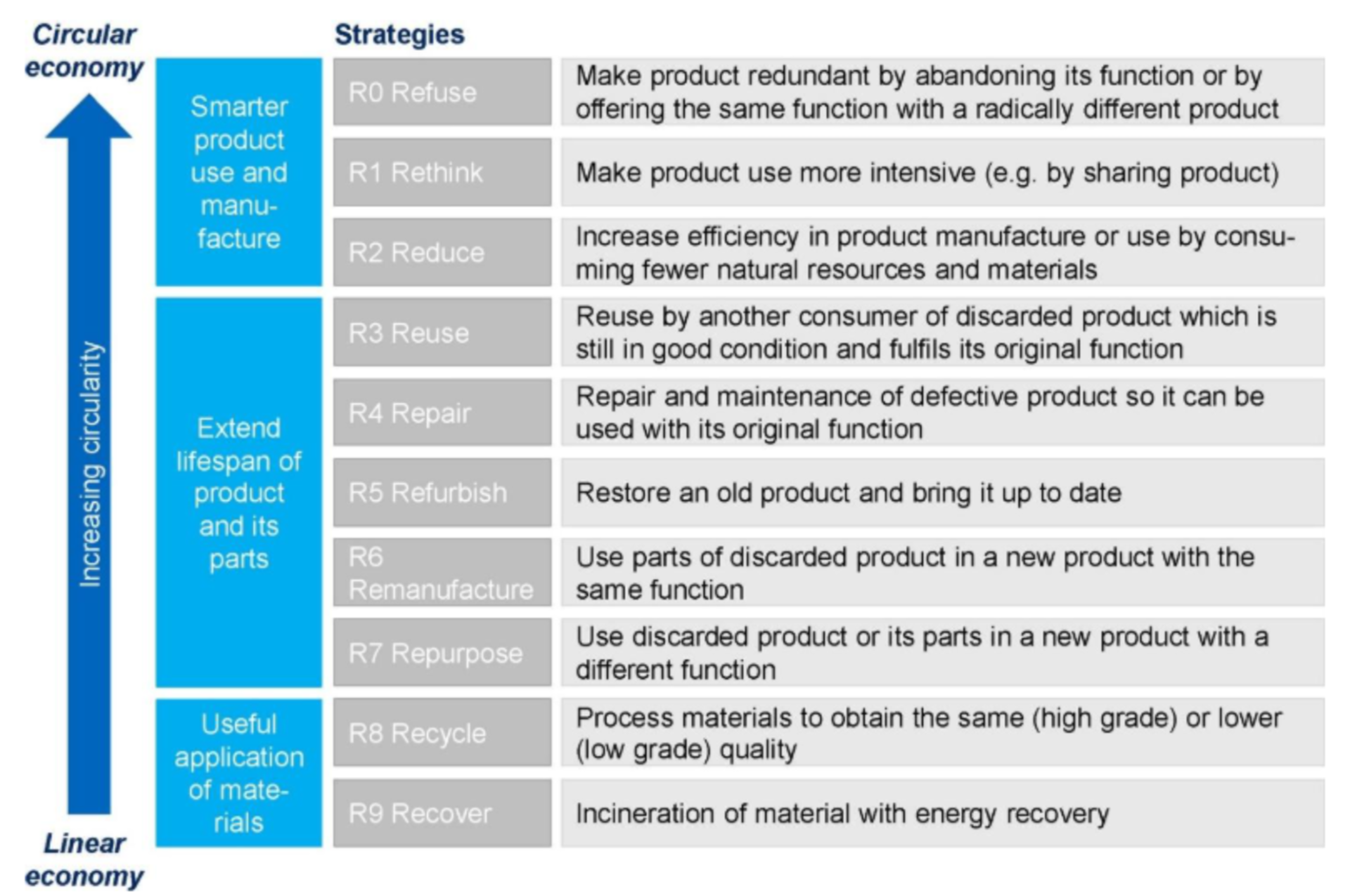
Solving the plastic waste problem requires re-evaluating our relationship with plastics. One way is to adopt the well-known 3Rs (reduce, reuse and recycle) (UNEP, 2004 p.2). More recently, this framework has been expanded to become the 9Rs as summarized in the figure from Kirchherr et al. (2017) below.
However, it is essential to recognize that taking these actions to address the plastic waste issue requires collaborative actions across various stakeholder groups, including governments, the private sector, academia, and the public.
How does the Regional Knowledge Centre contribute to addressing the issue?
Support research and data collection on plastics and their impacts to inform better policies in addressing marine debris – because understanding the status quo and the cause of plastic pollution is important to propose appropriate and optimal solutions.
Disseminate information and build public awareness on marine debris and their impacts – because plastic pollution is still generally not well understood and raising awareness of the issue is essential.
Develop partnership and organize events and workshops to support stakeholders in the ASEAN region in addressing marine debris – because collaborating and joining forces with other institutions is vital to make impactful change.
Support companies in sharing innovative solutions to marine debris – because we recognize that plastic producers and other plastic-related companies are our allies for the common goal of combating plastic pollution.
Read more about the Regional Knowledge Centre and its work here.
What is the Global Plastics Treaty?
The Global Plastics Treaty is an agreement among countries across the world to take measures to combat plastic pollution (UNEP, 2022 p.3). It aims to make sure that all countries work together and are held to the same standards when it comes to taking action against plastic pollution. This is historically significant, as this is the first time that a global scale legally binding solution to plastics is being discussed. This Treaty is still being developed and is expected to be completed by the end of 2024 (UNEP, 2022 p.3). Read more about how the Regional Knowledge Centre is involved in developing this Treaty here.